


The United States of America is a vast, open landscape of culture; a hodgepodge of the world begging to be explored at ground level. Since automobiles became capable of it in the 1920s, long distance travel across the states has been deeply ingrained in American culture. Roadways crisscross the continent, serving an untold number of travelers on an eternal quest to get somewhere, and along these well worn paths businesses like motels, cafes, and antique shops have stood solidly by to entertain guests of the road. Alongside these constant fixtures of road trips, another staple of the roadside has remained steadfast: The infamous “tourist trap.”
From California’s “One Tree House,” an entire dwelling built from a single hollowed out redwood trunk, to The Oregon Vortex, an optical illusion produced by odd architecture and a gravity hill, tourist traps have been raking in the dough for decades at a couple bucks a person.
The Thing in the Desert
Before the United States implemented the interstate system in the 1950s and streamlined cross country travel, long distance driving tended to be a boring affair. Weary road warriors looked for any kind of distraction, and dozens if not hundreds of stands popped up along popular routes, ranging from quirky to downright bizarre.The Thing of the Arizona desert is one of the most famous examples. Billboards advertise the mysterious Thing to folks driving down Interstate 10, touting it as a mind-boggling mystery that must be seen to be believed. Housed in the Thing Museum (which is also conveniently doubles as a gas station) The Thing has tempted curious visitors inside for decades. Amongst surprisingly historical artifacts ranging from antique firearms to a 1937 Rolls-Royce (near a sign dubiously claiming that it may have been used by Hitler) the exhibit awaits to finally be revealed after miles of anticipation.
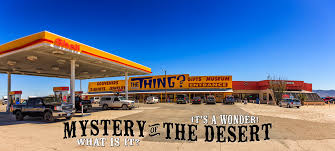
Behind a scratched plexiglass display case, The Thing consists of two mummified figures, supposedly mother and child. While to corpses are real, the attraction was allegedly created by Homer Tate, a famous fabricator of sideshow display creatures. Lawyer Thomas Prince purchased The Thing some time in the mid 20th century, opening the museum centered around the ghoulish creation in the mid-sixties. As for how he ended up with it, his wife Janet said in an early interview: “A man came through here about six years ago. He had three of the [bodies] he wanted to get rid of; he was selling them for $50.”
Corn and…Cars?
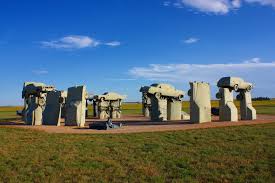
The plains of Nebraska boasts another time-honored road trip stop: Carhenge. As you may have deduced from the title, Carhenge is a replica of England’s more famous Stonehenge, built entirely out of cars and spray-painted gray as a final touch. Artist Jim Reinders and his family built the art installation in the summer of 1987 as a memorial to Reinders’ father, and has since become a hotspot for those driving through the mind-numbing scenery of the state. Visitors can find this oddly beautiful landmark outside the town of Alliance, Nebraska.
Roadside Time Capsules
These places are silly, kitschy, arguably a waste of time. Why would anybody want to stop and give their time (and more often than not their cash) to places like these? Because it’s silly, kitschy, and a time waster. The incessant over-hyping of the attractions leading up to them, the over the top presentation, the strange feeling of knowing that someone is taking you for a ride, it all melds into a strange kind of experience akin to an amusement park. You’re aware that everything is fake from the get-go; the fun of it is playing along with the story of it all. More than that, places like The Thing Museum house other artifacts and displays interesting enough to warrant a quick leg-stretch.
Experiencing these strange relics of the past is like stepping back into the shoes of our parents, trapped in the backseat of a station wagon and looking for relief from the endless asphalt. The in-your-face advertising instills a sense of wonder that can’t quite be described, and they’re reminders that entertainment wasn’t always as simple as taking your phone out of your pocket. While not every single one of these places is worth a stop on your next road trip, it wouldn’t hurt to take the next left for the “World’s Largest Ice Cream Cone.”
 Welcome to the online portfolio of Tilsen Mulalley.
Leave a comment