


The 1970s was an interesting time for television. TV movies were all the rage, and with only a handful of channels to choose from, they were guaranteed to be the talk of the water cooler the next day. These small-screen blockbusters were advertised in the paper, over the radio, and in magazines; we are talking about major cultural events here. Though many of these television movies were one-offs, some of them developed into series. Arguably, Columbo is the most famous of all of these.

For most people reading that last sentence, the name Columbo might ring only a vague bell somewhere in the back of their heads. The character debuted in 1968, after all, so apart from a Family Guy joke or something like that, the name might mean nothing. However, in the 1970s Columbo was one of several detective dramas that rotated out of the NBC Mystery Movie, an anthology series featuring a number of mystery programs with recurring characters played by the likes of Rock Hudson and Dennis Weaver. In Columbo, Peter Falk portrayed the titular character: a seemingly absent-minded homicide detective for the LAPD. Each case seems to be an airtight, “perfect” crime, with no trace of evidence to be found. As Columbo delves into the case though, we can always rely on our hero to clue into some seemingly innocuous piece of information and nab the crook. At first glance, it is your standard police drama. Watch an episode, though, and you will see what sets Columbo apart from detective stories today.
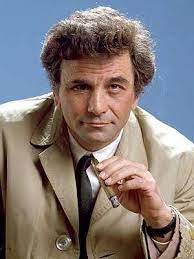
Columbo sets up its stories differently. Instead of the story relying on the anonymity of a murderer, the audience witnesses the crime firsthand at the very top of the episode. After the deed is done, we see how carefully our perpetrator (Always played by a guest star, of course!) has planned their crime. From there, they verbally spar with Columbo, who is much sharper than he appears. By the time they’ve realized they’ve underestimated him, it’s too late. Columbo isn’t a “whodunit;” rather, it is what is sometimes called a “howcatchem,” also known as an inverted detective story. Though it did not invent this concept, Columbo did popularize and pioneer it on television.
Removing the shroud of mystery around the perpetrator allowed for a plethora of guest stars throughout the show’s run, including Johnny Cash, Leonard Nimoy, and Vincent Price among others. It also allows for more in depth story-telling. Since the audience already knows the perpetrator, Dialogue between characters is often double edged and the main focus of most scenes. Columbo himself often goes off on tangents during his interviews, becoming distracted by things around him, objects in his pockets, and in some cases the murderer themselves. It is well known that Peter Falk often ad-libbed these interactions. Thus, while it feels more organic and fills the time slot, Columbo does move slower than its modern day successors. Some audiences may not like this, though if you’re a fan of the slow burn narrative, this show is a perfect choice for you.
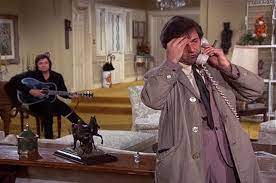
Though Columbo’s relevance to modern culture is long gone, it was around for much longer than most people realize. After its initial run on NBC ended in 1978, Columbo would appear sporadically on ABC beginning in 1989, and the last TV special featuring the character debuted in 2003. Though it might not be everybody’s cup of tea, Columbo is a treasure for fans of crime drama and vintage television. You can find it on IMDBtv.
 Welcome to the online portfolio of Tilsen Mulalley.
Leave a comment